

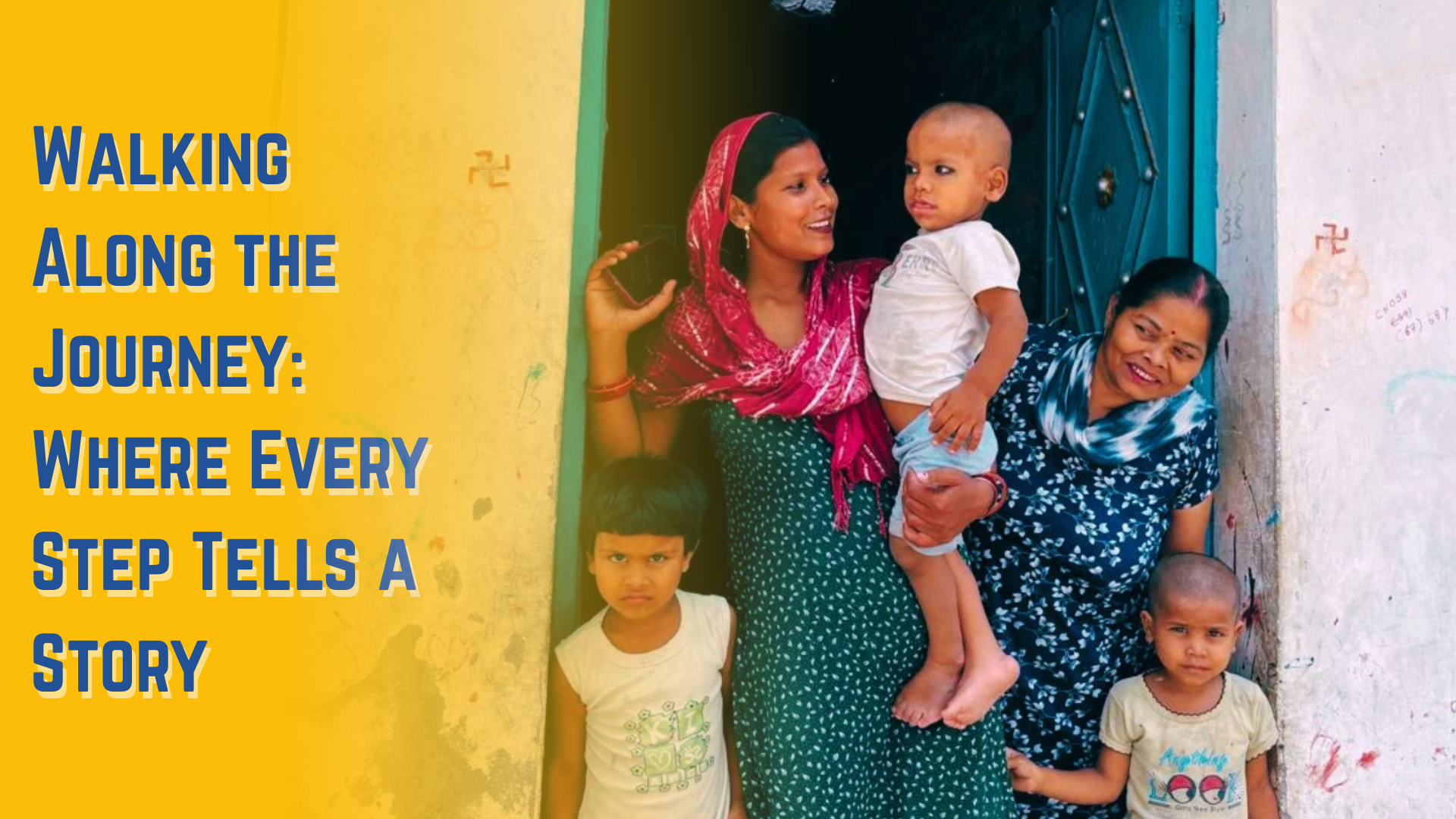
When we think of healthcare, we often think about hospitals, doctors, medicines, and treatment. But after spending a few days in Sambhal, Uttar Pradesh, I realised that healthcare is also about distance, resilience, community, and the quiet determination of families who refuse to give up.
Sambhal, a predominantly rural district in western Uttar Pradesh, is home to over 2.19 million people spread across more than 1,000 villages. The district is divided into eight development blocks: Bahjoi, Sambhal, Asmoli, Rajpura, Gunnaur, Baniyakhera, Junawai, and Panwasa. While public health services have steadily expanded, access remains a challenge for many families living in remote villages.
My visit to Sambhal had one objective: to understand how our clubfoot programme functions in a rural setting and how it differs from the urban clinics I am familiar with.
I expected differences in infrastructure. What I did not expect was how much the experience would stay with me long after I left.
One of the first things I noticed was the journey families undertake just to reach the clinic. For many of them, treatment does not begin when they enter the hospital. It begins the moment they leave home.
Public transport is limited, and many villages have poor connectivity. As I spoke with one mother, she casually mentioned that if she could not find an electric auto, she would simply walk to the clinic with her child. She said it so naturally that, for a moment, it felt like just another part of her routine. But I couldn't stop thinking about it. What many of us would consider a difficult journey had become an ordinary part of her life because missing a treatment session was never an option.
That conversation changed the way I thought about commitment.
Over the next few days, I spent time speaking with eight or nine mothers. Each conversation was different, yet one theme echoed through almost every story.
Blame.
Almost every mother shared that when her child was born with clubfoot, fingers were pointed at her. Some were told it happened because they had stepped outside during a solar or lunar eclipse. Others were told they must have done something wrong during pregnancy. The reasons varied, but the blame almost always rested with the mother.
None of it was true.
Clubfoot is a congenital condition. It is not caused by an eclipse, by a mother's actions, or by anything she did or did not do during pregnancy. When identified early and treated using the Ponseti method, children with clubfoot can grow up walking, running, going to school, and living active, independent lives.
Yet myths often travel much faster than facts.
What stayed with me was not only the stigma these women had experienced, but also the strength with which they had faced it.
Many of them spoke about the comments they received from neighbours and extended family. But almost every mother also spoke about someone who stood by her. A husband who accompanied her to the clinic. Parents who encouraged her. In laws who supported treatment. That support made all the difference. It gave them the confidence to continue, even when others questioned them.
As I listened, I found myself looking at motherhood through a different lens.
Many of these women were only nineteen or twenty years old. While most people their age are still figuring out adulthood, they were already planning hospital visits, travelling long distances with infants, managing households, and making sure their child never missed a cast change or follow up appointment.
Everything they did revolved around one hope, seeing their child walk.
It was impossible not to admire their resilience. They never called themselves strong. They simply did what they believed every parent would do.
My visit also reminded me that programmes like ours cannot succeed on their own.
Behind every child who reaches a clinic is an entire public health system working together.
I met members of the Rashtriya Bal Swasthya Karyakram (RBSK) mobile health teams, who proudly spoke about the children they had identified and referred to our clinics. There was genuine pride in their voices. Every referral meant that another child had the opportunity to receive treatment before it was too late.
I also met an ASHA worker whose connection to clubfoot was deeply personal. She is the grandmother of a child born with the condition. Having walked this journey with her own family, she has now made it her mission to identify children with clubfoot in nearby villages, counsel their families, and ensure they begin treatment as early as possible. What began as a personal experience has now become a commitment to helping countless other families.
Meeting her reminded me that some of the strongest advocates are those who have lived through the experience themselves.
As I travelled back from Sambhal, I realised this visit was never just about understanding how a rural clinic functions. It was about understanding the people who make the programme possible. The mothers who walked miles without complaint. The frontline workers who celebrated every child they referred. The government health system that made specialised treatment accessible in places where access itself is often the biggest challenge.
Long after I left Sambhal, I found myself thinking less about the clinics and more about the people.
I thought about the young mother who would walk if she couldn't find transport. I thought about the women who carried the weight of blame but refused to let it define their children. I thought about the ASHA worker who transformed her family's experience into a mission to help others.
Healthcare, I realised, is not built only through hospitals, programmes, or policies. It is built by people. By mothers who choose hope over despair. By frontline workers who believe every child deserves a chance. And by communities that come together so that one day, every child, no matter where they are born, can take their first steps with confidence.
Author: Nethra Nair